The Brain Dump Method: Clear Your Head in 10 Minutes
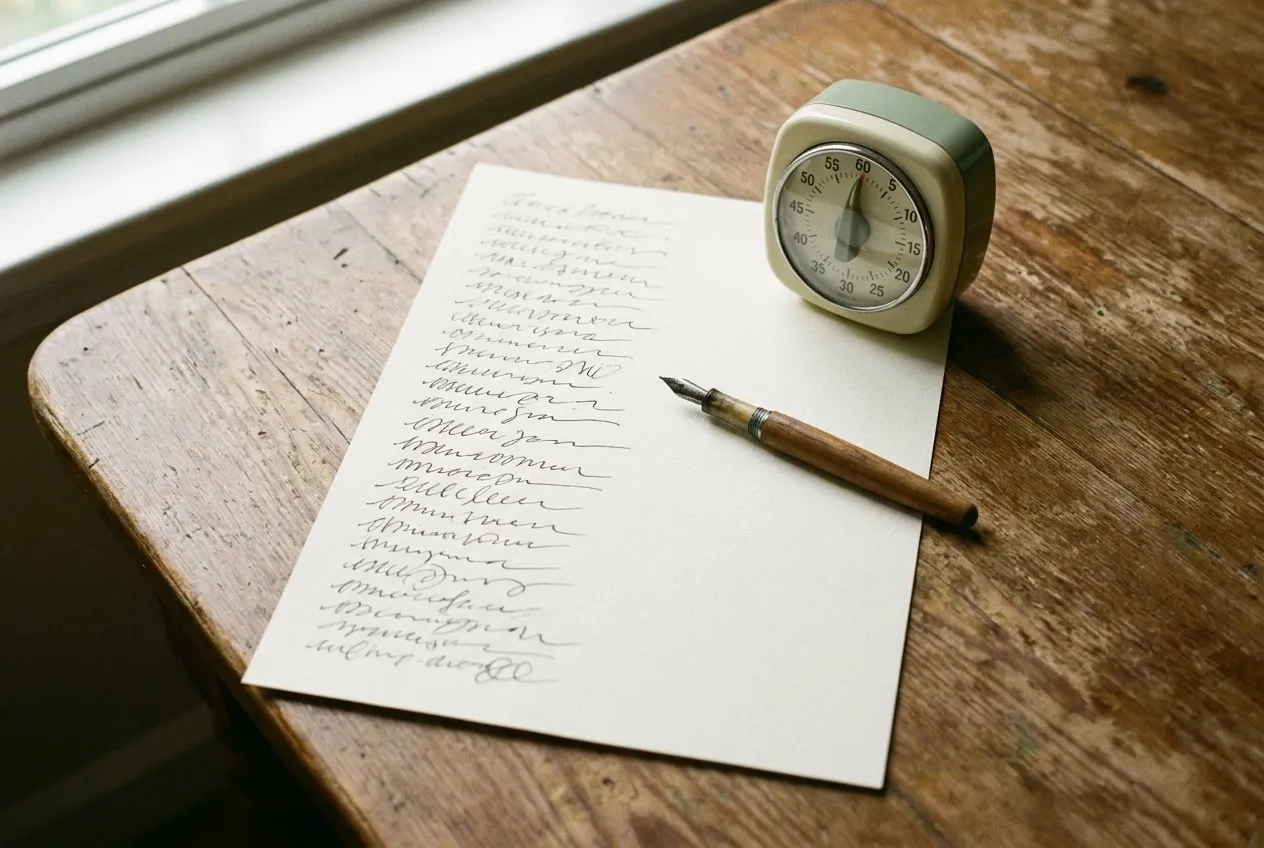
A brain dump is simple: set a timer for ten minutes and write down everything your head is trying to hold — one item per line, no order, no editing. The relief comes from the unloading. The lasting value comes from what you do with the list afterwards, which is the step most guides skip.
What a brain dump is (and isn’t)
A brain dump is an inventory, not a journal entry. You’re not reflecting, explaining, or writing well — you’re listing open loops: tasks, worries, ideas, things half-promised to other people, the dentist you keep meaning to call.
The reason it works is mundane and well-documented: your head is a terrible holding pen. Unfinished business keeps poking at attention (psychologists have studied this as the Zeigarnik effect — open loops stay mentally “live” until they’re handled or written down). The brain treats written down somewhere I trust as handled enough to quiet down. You’re not solving anything in those ten minutes. You’re just moving the inventory somewhere that doesn’t cost attention to maintain.
The signs you need one
- You’ve read the same email three times and retained nothing.
- You’re snapping at small things that don’t usually register.
- You lie down at night and your head starts rehearsing lists.
- You have the vague, humming sense of forgetting something important — constantly, about nothing specific.
- Starting anything feels heavy because everything else is also half-started.
One honest caveat: a brain dump clears the backlog noise of a busy life. If the noise in your head feels heavier than a busy week can explain, and emptying the list doesn’t touch it, that’s not a productivity problem — talk to someone qualified rather than to a notes app.
The ten-minute method, step by step
- Set a real timer for ten minutes. The timer matters: it makes the exercise finite, so your brain stops rationing.
- Write one item per line. Fragments are perfect. “Tires.” “Mom’s birthday.” “The thing Selin asked about.” Nobody is grading this.
- No sorting, no editing, no solving. The moment you stop to organize, you’ve switched tasks. Keep listing.
- When you stall, use the four unlock questions: What am I waiting on? What do I owe someone? What am I avoiding? What’s coming in the next two weeks?
- Push past the first lull. Around minute four, you’ll feel done. You’re not — that’s the end of the loud layer. The quieter second wave after the lull is usually where the real weight sits: the unmade decision, the conversation you’re postponing.
- Stop when the timer stops. Done is the goal, not complete. There will be other dumps.
Sorting the pile: three groups, two minutes
Now read the list once and mark each line into one of three groups:
- Actions — things with a next step you could take within a week or two. Call the dentist. Buy the tires.
- Later and ideas — real, but not now. Gift ideas, someday projects, the article to read.
- Things you can’t control — worries with no action attached. The economy. Whether the email landed well. Naming these explicitly matters: seeing there is no action here in writing is precisely what lets some of them loosen.
Resist inventing a fourth category. Three is enough, and the sort should take two minutes, not twenty.
Paper, typing, or talking
Pick by mood, not dogma. Paper feels ceremonial and keeps you off a screen — good for the overwhelmed-at-22:00 variety. Typing is fastest to sort afterwards. Talking is the fastest dump of all: pacing the kitchen narrating your open loops gets more out in ten minutes than either, especially if writing feels like a chore that day. The practical requirement is the same as for any voice capture: the recording has to become searchable text, or your dump is just stored anxiety with a play button.
What happens afterwards — the skipped step
This is where most brain-dump advice ends and most brain dumps fail. A dump that goes nowhere teaches your brain that unloading is pointless, and the next one gets harder to start.
Each group gets a different exit:
- Actions go where actions live — your to-do list or reminders, with dates where dates exist. If your notes app can turn “tires before the trip on the 21st” into a reminder on its own, this step costs nothing.
- Later and ideas go into your notes — your second brain, if you keep one — somewhere retrievable by asking, not by re-finding the dump page.
- Can’t-control items get left behind deliberately. Don’t file them. The dump page was their destination.
The original list is now trash, and throwing it away is the point: everything on it is either scheduled, stored, or consciously released.
The weekly reset version
Done occasionally, a brain dump is first aid. Done weekly, it becomes maintenance — and the dumps get shorter, because loops stop accumulating ten days of interest.
Mine is Sunday evening, ten minutes, usually while the tea steeps. The honest observation after months of it: the list rarely gets shorter, but it stops being heavy, because nothing on it is being carried by memory anymore. The head empties; the system holds it.
That’s the realistic promise. Not a quieter life — a quieter head inside the same life. And if what’s flooding you isn’t the backlog but the constant arrival of new thoughts at unusable moments, that’s the other half of the problem: catching ideas before they disappear.