How to Deal With Forgetfulness: A System, Not a Struggle
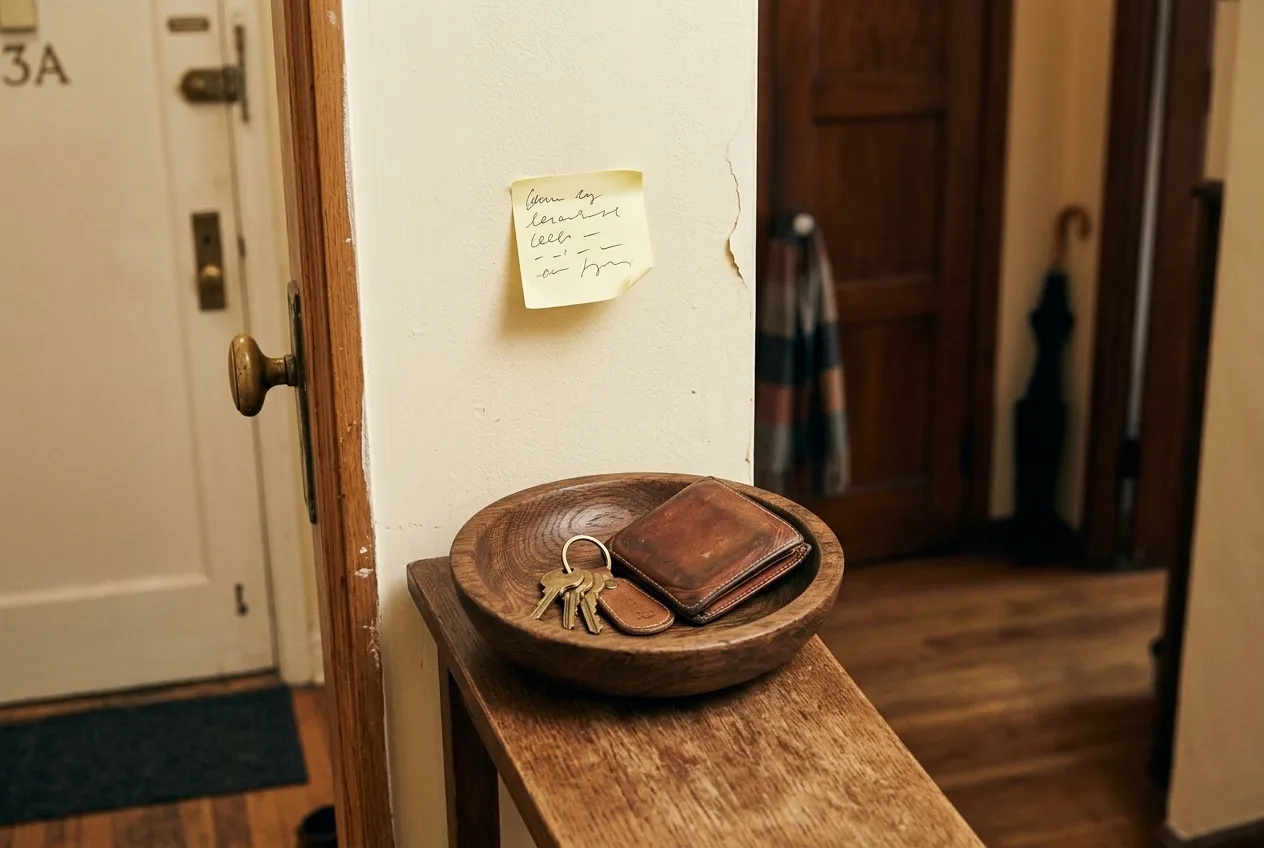
Everyday forgetfulness responds better to a system than to effort. Trying harder to remember doesn’t work — working memory doesn’t take instructions — but a simple external system catches nearly everything: capture at the moment, keep one trusted place, let reminders interrupt you, and use notes you can question later. Here’s that system, piece by piece.
One honest line before the productivity advice: this post is about ordinary forgetfulness — names, errands, where-did-I-put-it. If your forgetting has changed suddenly, worries the people around you, or comes with other symptoms, that’s a conversation for a doctor, not a notes app.
Stop treating memory as a character trait
The unhelpful frame is “I’m a forgetful person” — a flaw to be ashamed of and somehow fix. The useful frame is mechanical: human memory is unreliable storage for details, everyone’s is, and people who seem to forget nothing are almost never remembering — they’re writing things down and checking. The difference between “sharp” and “scattered” is usually a system, not a brain.
That reframe matters practically, because shame produces resolutions (“I’ll really focus this time”) and resolutions don’t survive Tuesday. Systems do.
Rule 1: capture at the moment, never later
Forgetting mostly happens in the gap between learning a thing and recording it. “I’ll write it down when I get home” is where information goes to die — the errand mentioned at breakfast, the name at the school gate, the thing your boss added in the hallway.
Close the gap to seconds: the moment something arrives, it goes in — a four-word note, a voice note while walking if your hands are busy. This feels excessive for about a week. Then it becomes the quiet superpower everyone mistakes for memory. The mechanics of making capture take under five seconds are their own topic, but the principle is the rule: now, not later.
Rule 2: one place, so checking works
A system you half-trust is one you don’t use. If things might be in your head, on a sticky note, in three apps, or told to your partner, then checking requires searching five places — so you don’t check, and the system collapses back into trying to remember.
Everything goes in one inbox. Not categorized — just in. The bowl by the door works for keys precisely because it’s the only place keys go; your notes need the same monogamy.
Rule 3: let reminders do the interrupting
Some things should not wait politely in a note. Deadlines, appointments, take-the-medication, move-the-car: these need to come find you. The forgetful person’s classic failure is storing a time-bound thing somewhere passive — writing “permit renewal July 3” in a notebook is functionally identical to forgetting it.
So split the world in two: facts wait in notes, obligations interrupt via reminders. The best version is when you don’t even make the choice — you note “renew the parking permit by July 3” and the system files it as a reminder because of what it says.
Rule 4: retrieval must not require memory
Here’s the trap nobody warns forgetful people about: most note systems assume you’ll remember that you took the note, what you called it, and where you filed it. Folders, tags, clever titles — all of it is memory with extra steps, which is why your notes never resurface.
The fix is retrieval that works like asking a person: “where did I put the spare car key?” “what’s the name of Ela’s new teacher?” “when was the boiler last serviced?” Notes you can question in plain language close the loop — capture without thinking, retrieve without remembering. (Full disclosure: I built my app, Second Brain, around exactly this loop, because I’m the target audience.)
The two-week trust curve
Run the four rules for two weeks and a specific moment will happen: you’ll check the system for something — half-expecting nothing — and it will be there, captured by a version of you that has since completely forgotten the event. That moment is the whole transformation. The background hum of “I’m forgetting something” quiets down, not because you remember more, but because forgetting stopped costing anything.
That’s the realistic promise of dealing with forgetfulness: not a repaired memory — a retired one, pensioned off to a system that doesn’t have bad days. Yours can finally relax and do what it’s actually good at: recognizing faces, holding grudges, and remembering song lyrics from 2009.